Executive summary
Irregular migration to Europe and Spain has undergone profound transformations over the past decade, with changes in flow intensity, route reconfiguration, and sustained pressure on specific border areas. At the same time, institutional responses have increasingly relied on border control and cooperation with countries of origin and transit, while humanitarian challenges and limitations in accurately measuring the phenomenon persist, particularly regarding deaths and disappearances.
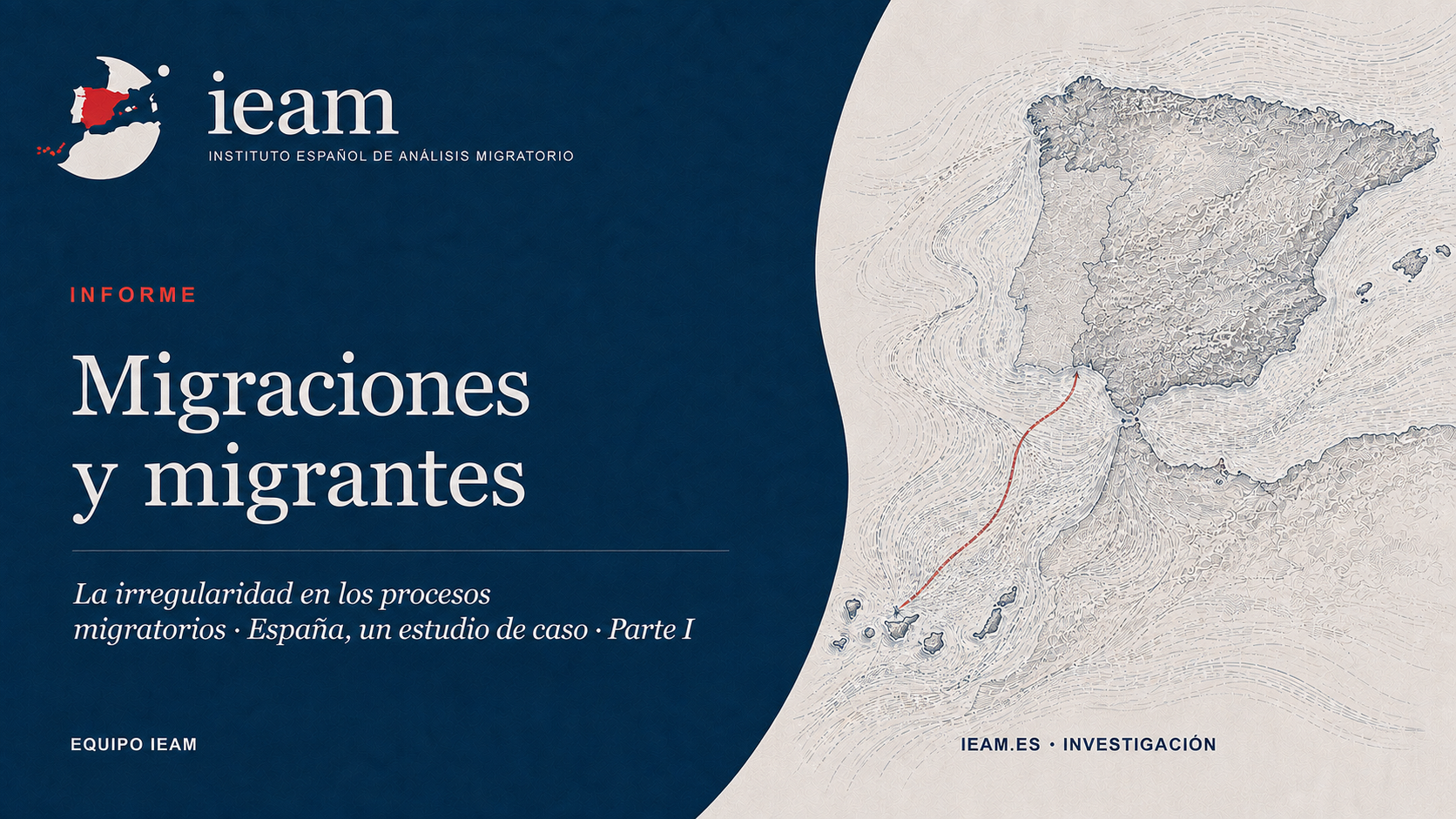
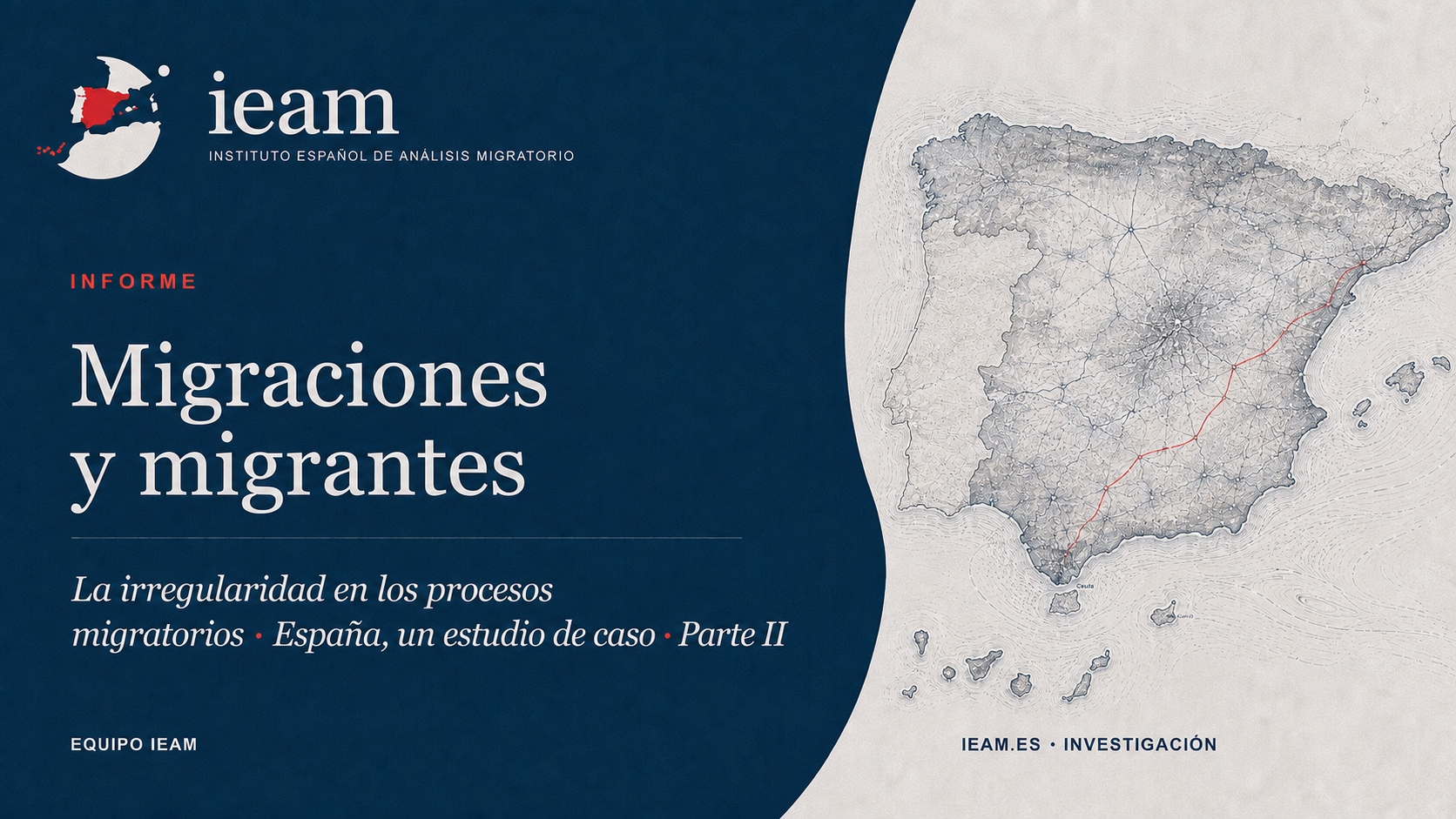
This report is divided into two parts. The first part, published in December 2025, analyzed the evolution of irregular migration to Spain within the European context, examining trends and flows, routes used, and challenges related to reception and international protection systems, with particular attention to the centrality of the Atlantic route and pressure on the Canary Islands. The second part examines regularization processes, the characteristics of migrants in irregular status, and the administrative and humanitarian challenges associated with their integration. It reviews the evolution of Spanish policies since the 1980s, with a focus on arraigo (roots procedure). The report also considers the historical context of Spain as a country of emigration for decades, developing its regulatory framework and statistical system “in parallel” with increasing immigration, leaving gaps that still affect the monitoring of some administrative procedures. Special attention is given to unaccompanied foreign minors (UAMs) and the territorial dynamics of their distribution. Finally, repatriation procedures are examined, highlighting tensions between legal frameworks, migration realities, and institutional capacities.
Spain became a receiving country before having a fully developed migration policy, which led to successive extraordinary regularization processes granting residence permits to people already living in the country. Since 1985, multiple regularizations have taken place (eight extraordinary processes prior to the one approved on 27 January 2026). These processes created a migration regime combining ordinary channels with subsequent regularization mechanisms, especially through arraigo.