Executive summary
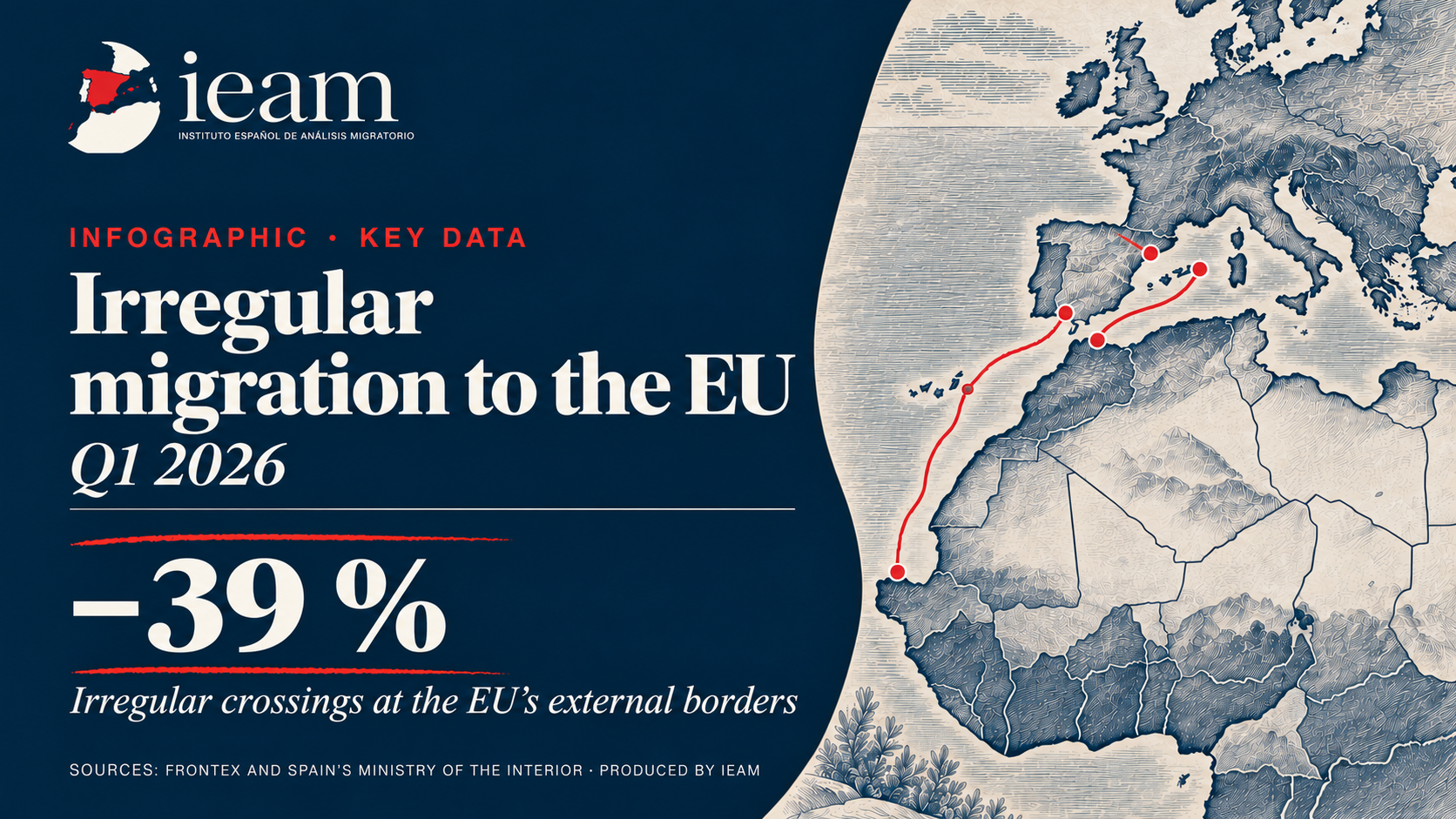
Irregular migration to Europe has undergone profound transformations in recent decades. Spain, in particular, has consolidated its position as one of the main receiving countries for irregular arrivals within the European area, in a context marked by instability in West Africa, sustained pressure along the Atlantic and Mediterranean routes, and the growing externalization of borders by the European Union. In 2025, these two routes connecting to the Canary Islands and the Iberian Peninsula accounted for 22% of the total irregular arrivals to the EU. Understanding these dynamics is essential to interpreting recent trends and their implications.
The purpose of this report is to analyze the evolution of irregular migration to Spain over the last decade, situating it within the European context and examining its main manifestations using official and humanitarian sources. The study provides an integrated view of migration trends and flows, routes used, and challenges related to reception and protection systems, highlighting their complexity, structural nature, and evolution over time. The report is structured around three axes: i) irregular migration in the European context, based on Frontex data; ii) irregular migration in Spain, drawing on information from the INE, the Permanent Observatory on Immigration, the IOM, and Caminando Fronteras; and iii) international protection processes, with data from the Ministry of Interior and CEAR.