InterviewAtlantic Flows
The Director of IEAM analyses how pressure on Mauritania and instability in the Sahel are influencing migration flows toward the Canary Islands.
20 September 2025 · IEAM Team · 3 min read
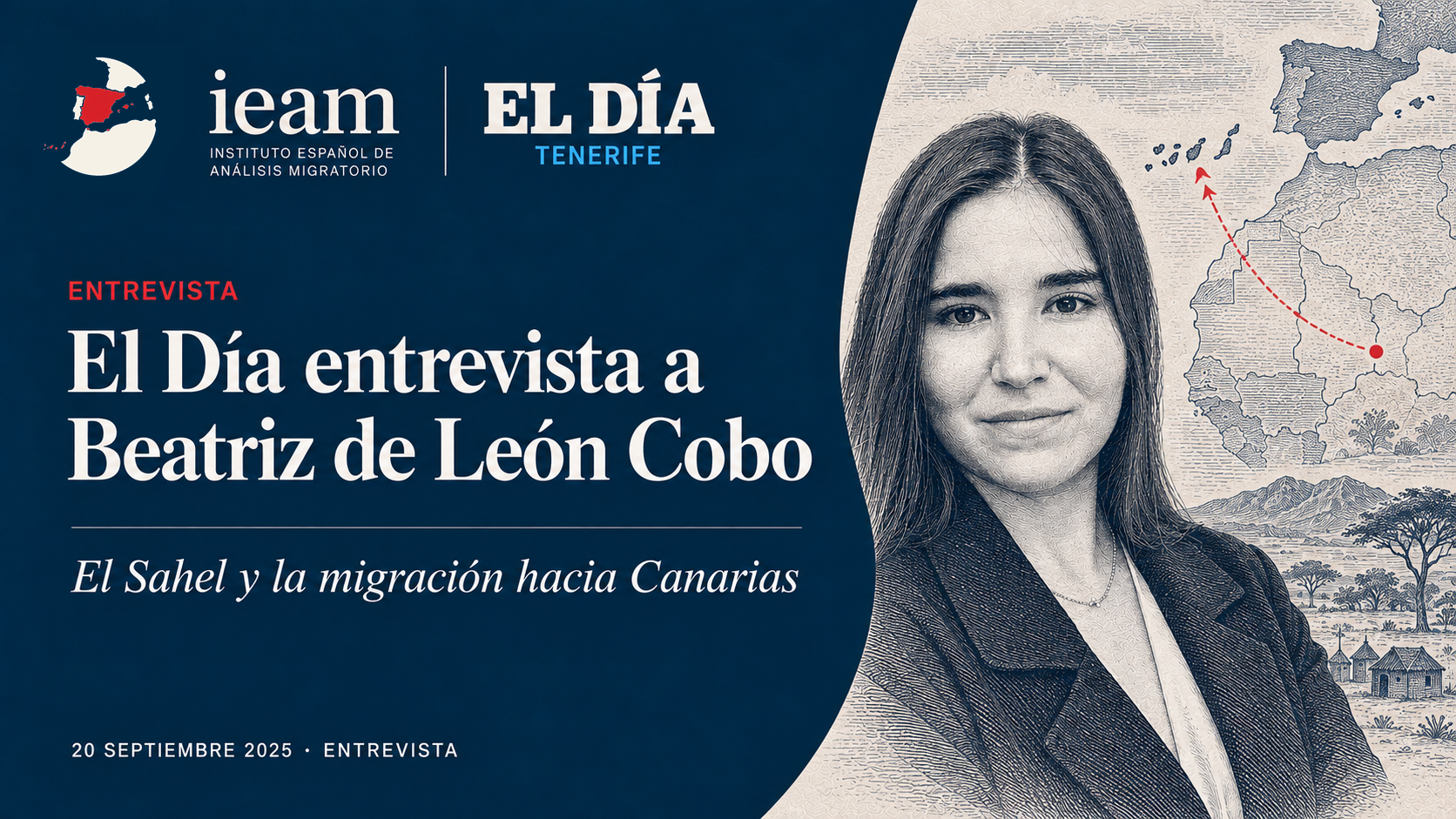
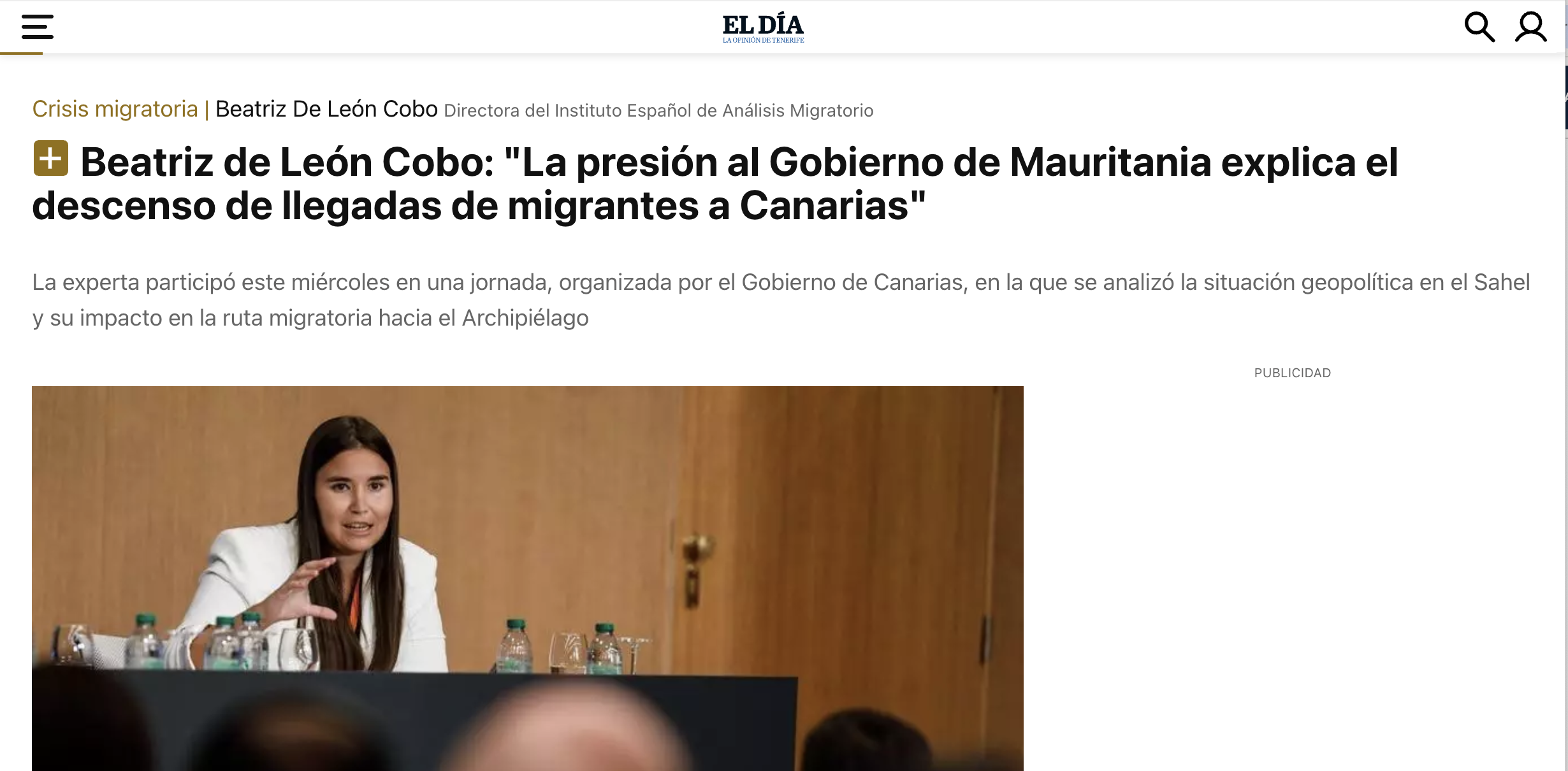
El Día interviewed Beatriz de León Cobo, Director of IEAM, following a session organised by the Government of the Canary Islands on the situation in the Sahel and its impact on migration to the archipelago. Published on 3 September 2025 and written by Alexandra Socorro, the interview examines the role of Mauritania, the factors shaping departures and the need for sustained cooperation with African partners.
The factors shaping mobility from the Sahel
De León Cobo links migration dynamics to overlapping pressures: insecurity and economic hardship, weaknesses in governance and public services, and structural challenges such as climate change. In the interview, she highlights the importance of understanding these circumstances alongside people’s search for work and greater stability, particularly in Mali.
A response beyond border controls
Operational support can help address emergencies, but it cannot replace a broader strategy. Her analysis calls for sustained action in countries of origin and transit, combining cooperation, development and coordination between African and European partners.
Keeping the Sahel on Europe’s agenda
The interview places the Sahel within a crowded European foreign-policy agenda. De León Cobo points to the need for continuity: public attention and political priorities change, while the region’s underlying challenges demand a long-term response.
Cooperation with continuity and local ownership
Looking back at international initiatives, she stresses that their impact depends on whether programmes can continue once external funding or attention recedes. Sustainable results require local ownership and institutions capable of maintaining them over time.
The security dimension
Discussing the situation as it stood in September 2025, De León Cobo describes jihadist groups as focused primarily on regional objectives and expansion towards neighbouring West African countries. Her assessment distinguishes these dynamics from the question of a direct threat to the Canary Islands.
Mauritania and the changing Atlantic route
The central argument of the interview concerns the fall in arrivals in the Canary Islands. De León Cobo links it to increased pressure on the Mauritanian authorities and tighter controls, while warning that it was too early to know whether the trend would last. The interview also highlights the Canary Islands’ potential as a meeting point for cooperation between Europe and Africa.
Read the full interview in El Día (Spanish)
Source: El Día · Alexandra Socorro · 3 September 2025. Interview overview by IEAM. Cover: screenshot of the original article.
IEAM Team
Communications
Keep exploring
 Interview 04 Jun 2026by IEAM team
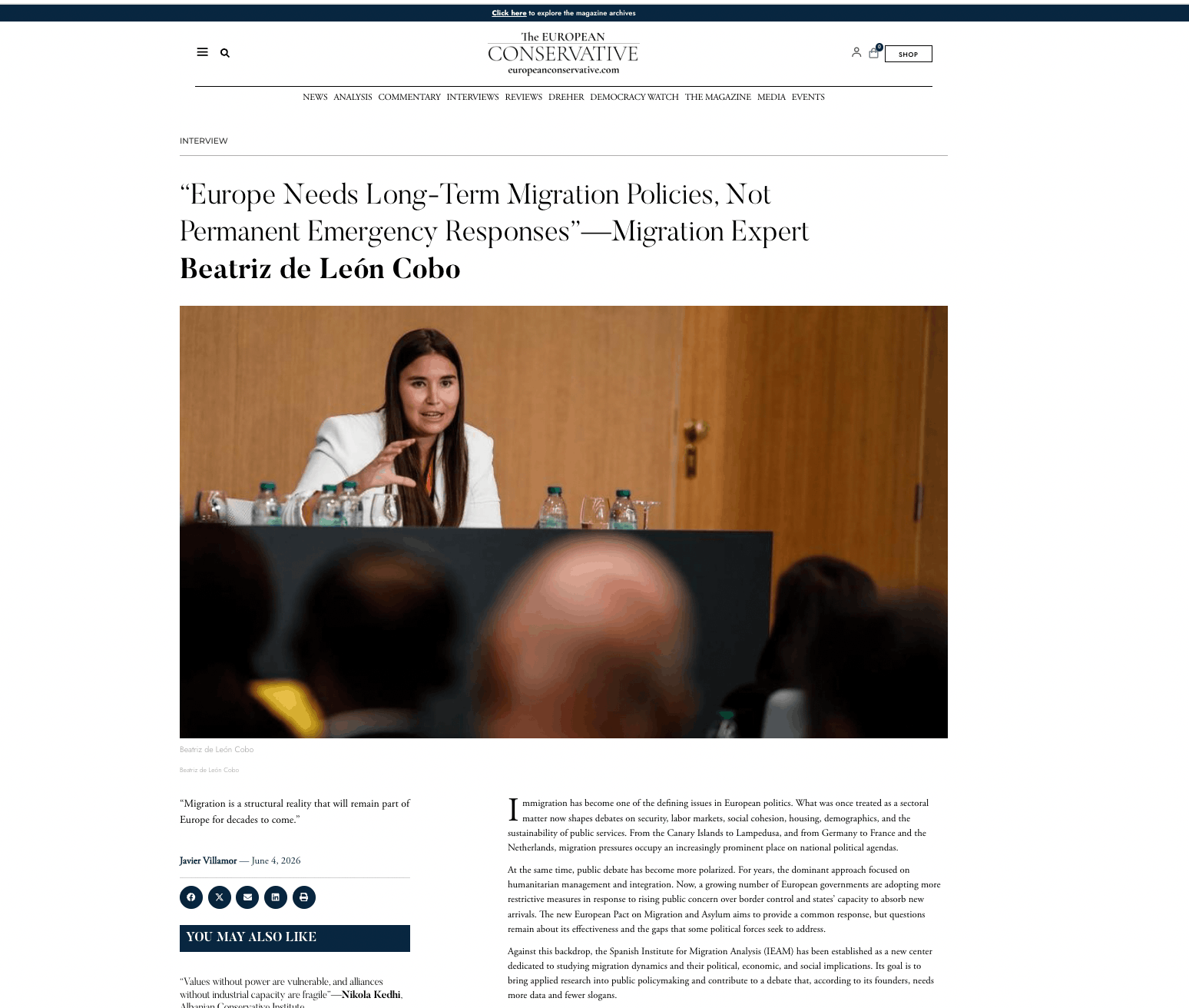
The European Conservative interviews Beatriz de León Cobo on migration, the Sahel, and European policy responses
IEAM's director discusses current migration challenges, the polarisation of public debate, and the need for more technical, precise, and long-term migration policies.
Read more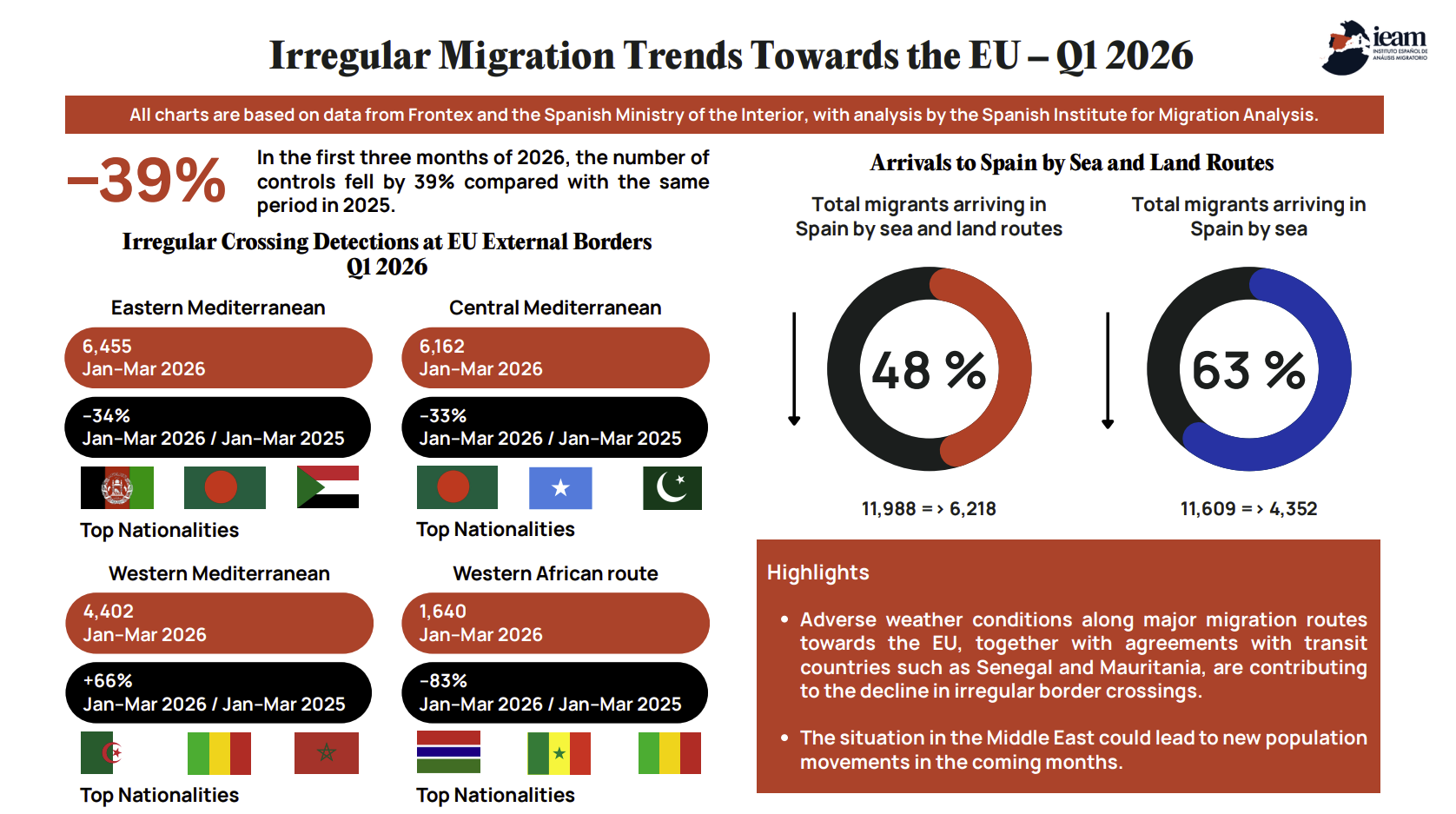 Infographic 28 Apr 2026by IEAM team
Irregular Migration Trends Towards the EU – Q1 2026
Analysis of the main trends in irregular migration towards the EU in the first quarter of 2026, based on data from Frontex and the Spanish Ministry of the Interior.
Read more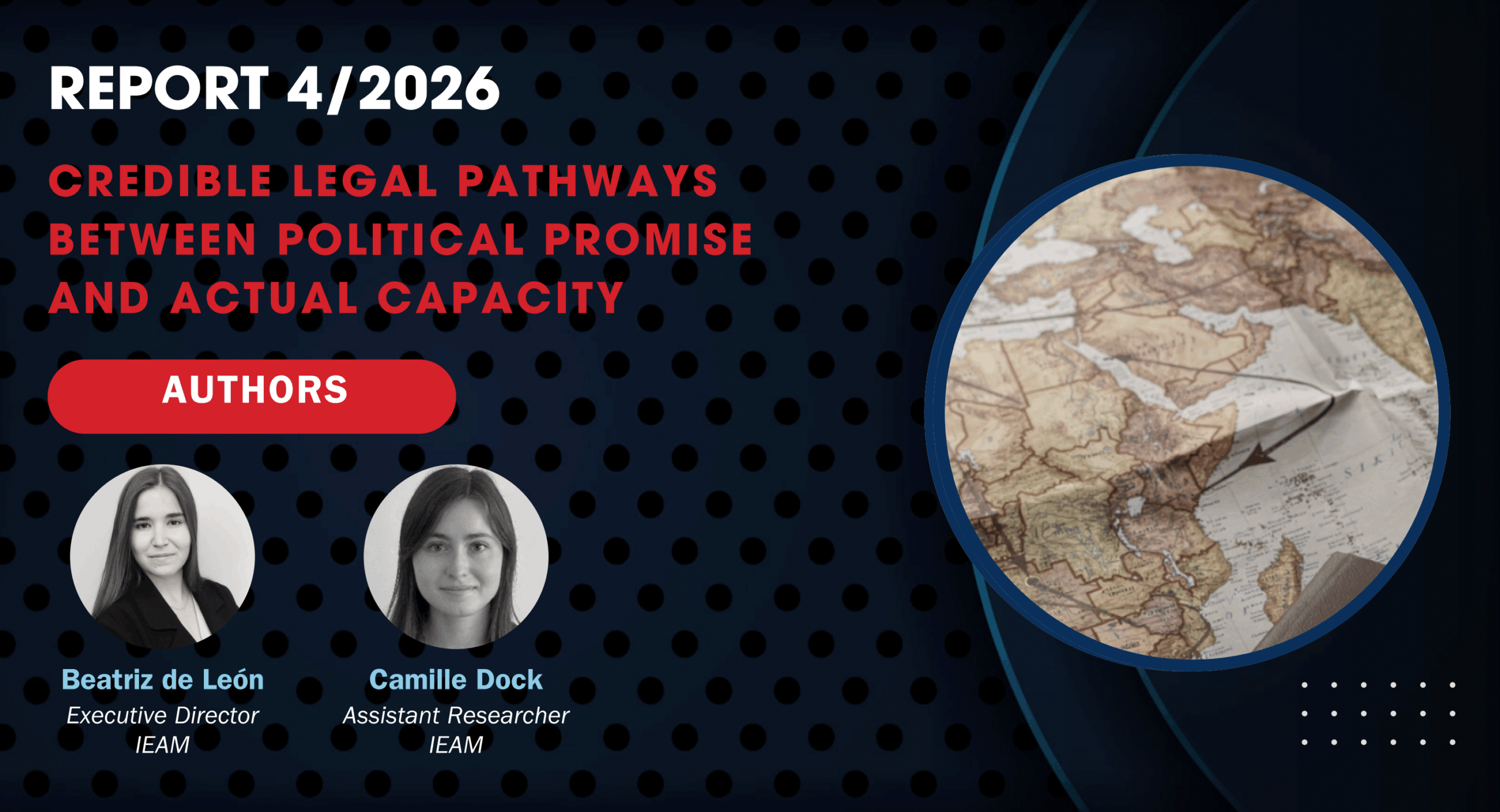 Policy Brief 14 Apr 2026by IEAM team
Credible legal pathways: Between political promise and actual capacity
Strategic guidelines to turn legal pathways into effective and sustainable mechanisms.
Read more