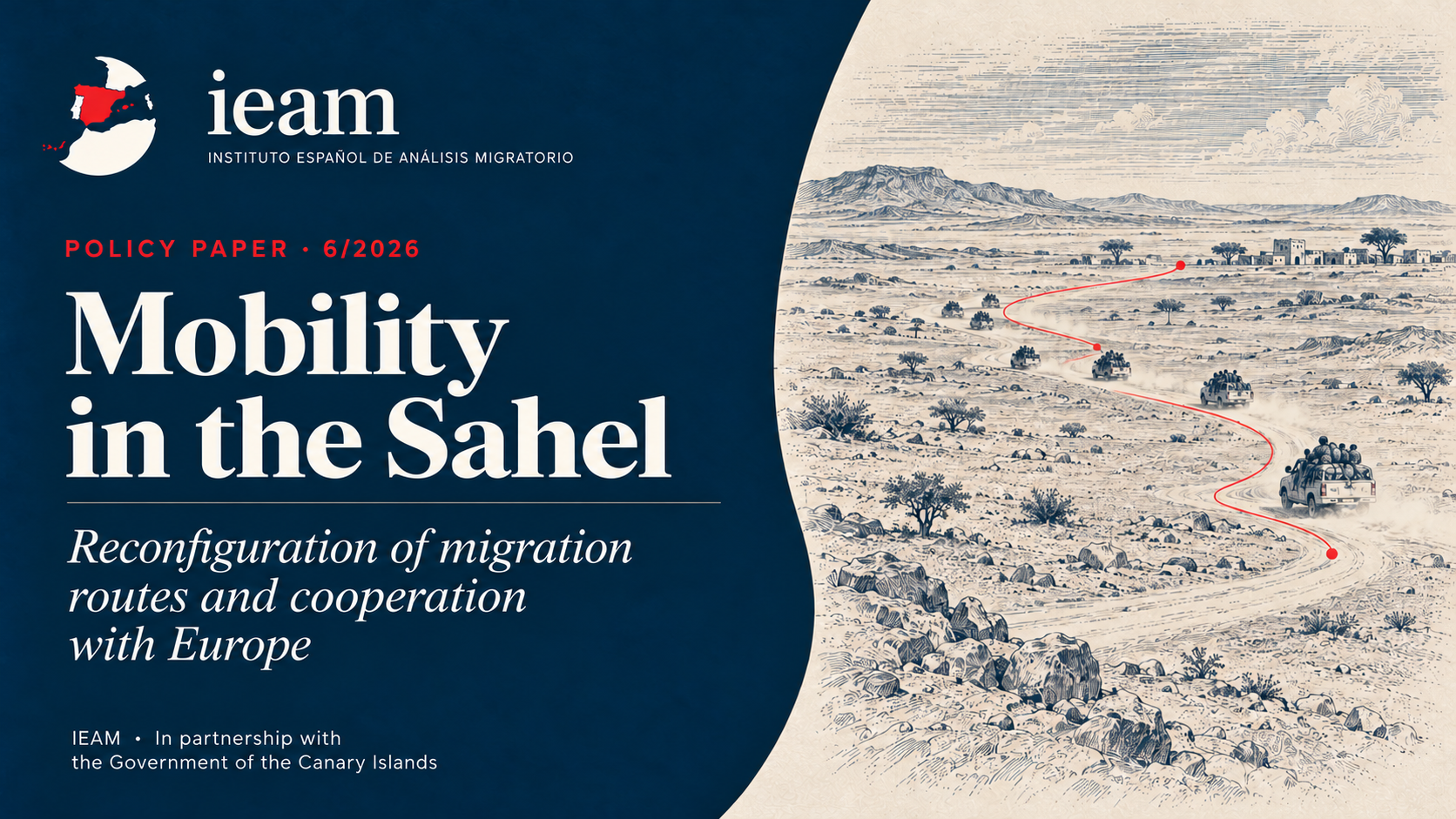
POLICY PAPER 6/2026 · 8 OCT 2026
IEAM Research Team
Executive summary
Policy Paper 6/2026 examines how insecurity, restrictions on movement and fragmented authority are reshaping mobility in the Sahel and cooperation with Europe. Drawing on Mali, Niger and Libya, it places migration routes within regional systems of work, trade and family ties, where forced displacement overlaps with temporary stays and changing mobility plans.
The analysis identifies a mismatch between European priorities of border control and readmission and Sahelian needs for protection, reception and reintegration. In Mali, facilitation networks adapt to controls while debt incurred in transit can lead to exploitation. In Libya, fragmented authority limits the guarantees that cooperation agreements can offer. In Niger, internal displacement places pressure on the services and livelihoods of host communities. These cases show why migration policies must account for effects beyond the European border.
The paper argues for assessing cooperation through its consequences for territories and people. Shifting routes, reception capacity and conditions of return are closely connected: action in one area affects the others. A balanced partnership requires Sahelian priorities to shape the negotiation, funding and evaluation of agreements, with sustained resources for local services, verifiable reintegration conditions and accessible mobility pathways. It also requires stronger domestic financing by African states and predictable European support. Regular pathways to Europe should be linked to labour market demand, while protecting the regional movement of workers and traders on which Sahelian economies depend.
Four priorities for cooperation
- Assess the regional effects of migration control. Track shifts in routes, transit costs and exposure to violence when evaluating agreements, while safeguarding protection and humanitarian independence.
- Consolidate funding for host territories. Sustain shared services and economic integration opportunities for displaced people and host communities beyond the initial emergency response.
- Make return conditional on verifiable reintegration conditions. Independently assess security, housing, employment and access to services and identity documents, with post-return monitoring and accessible complaint mechanisms.
- Preserve regional mobility and make regular pathways accessible. Protect the movement of workers and traders and develop predictable procedures aligned with labour demand and the recognition of qualifications.
Authorship and background. IEAM Research Team (2026). Policy Paper 6/2026 from the Spanish Institute for Migration Analysis (IEAM), in partnership with the Government of the Canary Islands. Based on discussions at the third workshop of the Sahel–Europe Dialogue Forum, held in Madrid from 15 to 17 July 2026.