Underscore_
IEAM’s Executive Director discusses border management, public perceptions of migration, regular pathways, integration and the need to anticipate migration crises before they reach Europe’s borders.
27 AUG 2026 · IEAM Team · 5 min read
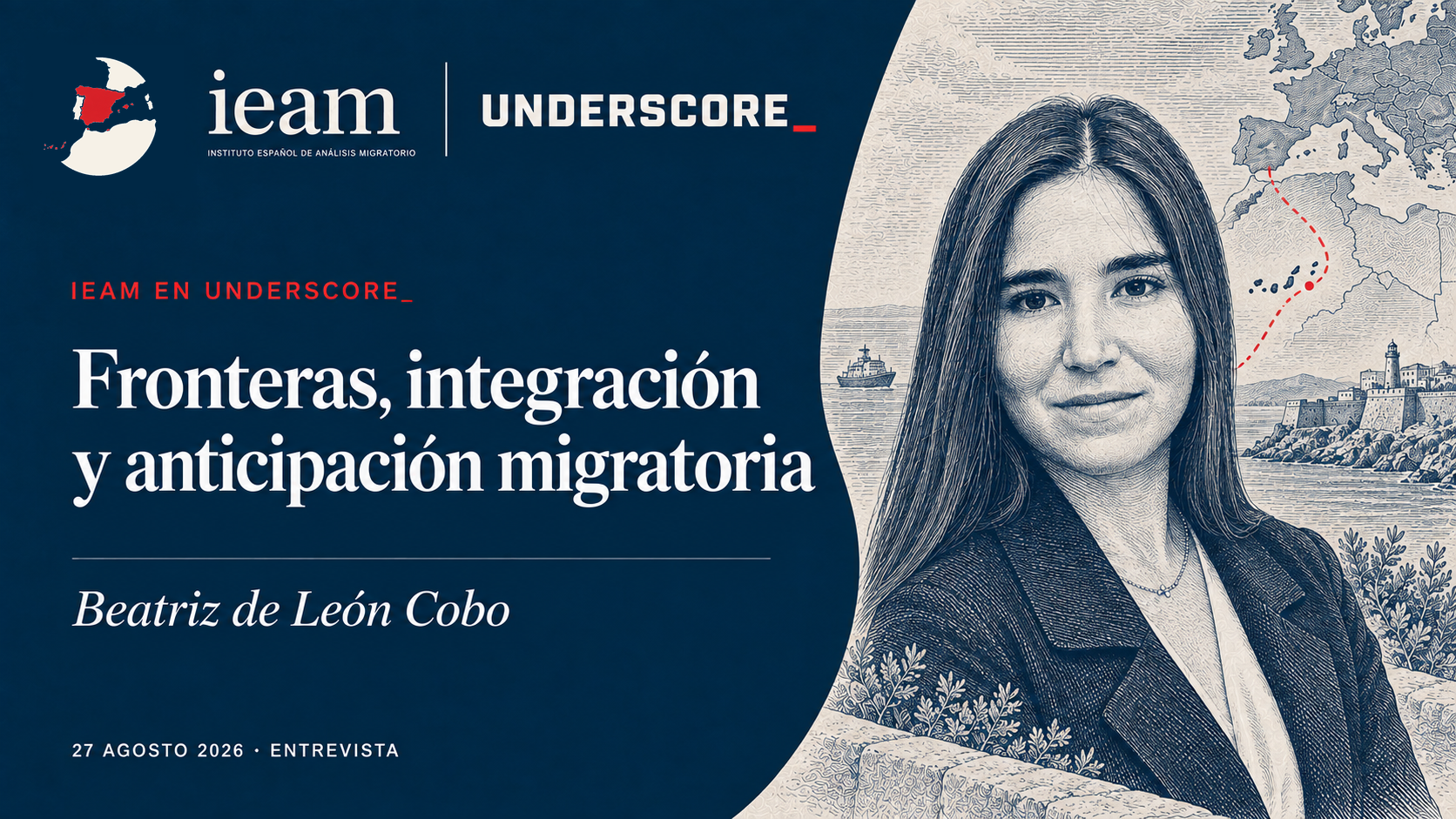
Beatriz de León Cobo, Executive Director of the Instituto Español de Análisis Migratorio —IEAM—, joined Or Yissachar’s podcast Underscore_ to discuss issues that should be central to a more effective European migration policy.
The conversation covers external border controls, public perceptions of migration, regular pathways linked to labour market needs, measuring integration, implementing return decisions and Europe’s ability to anticipate changes in migration routes.
Beyond the figures
One of the interview’s main messages is that figures are essential to understanding migration, but they are not sufficient on their own. Citizens’ perceptions of the state’s ability to manage migration, ensure security and preserve social cohesion also shape public debate.
From this perspective, effective migration policy must address both objective realities and institutions’ ability to respond visibly, predictably and credibly to demographic and migration changes.
Borders, regular pathways and integration
Beatriz de León Cobo argues that external border controls are a necessary dimension of migration policy, but cannot be its only response. Europe needs to combine border management with regular migration pathways adapted to genuine labour market needs and integration policies that can be assessed through concrete indicators.
Employment, education, housing, language learning and civic participation are among the factors that can help establish whether an integration policy is delivering results.
Effectiveness and legal safeguards
The conversation also considers the importance of ensuring that decisions taken by the authorities can be implemented. A migration system must provide international protection to those who qualify and fully uphold their rights. At the same time, its credibility also depends on final return decisions being implemented where appropriate.
For IEAM, effectiveness and legal safeguards should be understood as complementary requirements of a predictable, functioning migration system.
Anticipating changes in migration routes
Recent events in Ceuta illustrate a key need in European migration policy: strengthening its capacity to anticipate developments.
Migration routes change in response to border controls, available opportunities, the activities of networks, transit countries’ policies and information circulating among prospective migrants. Europe therefore needs mechanisms that can detect these changes before pressure builds at a particular border.
Anticipation makes it possible to prepare resources, strengthen cooperation with countries of origin and transit, and reduce the human and operational costs of emergency responses.
The interview was published on 27 August 2026 on Underscore_, Or Yissachar’s podcast.