- In-person
- Madrid, Spain
The Spanish Institute for Migration Analysis presents its first work in Madrid and calls for a more rigorous, strategic, and long-term debate on migration.
- 16 Apr 2026
- Madrid, Spain
- In-person
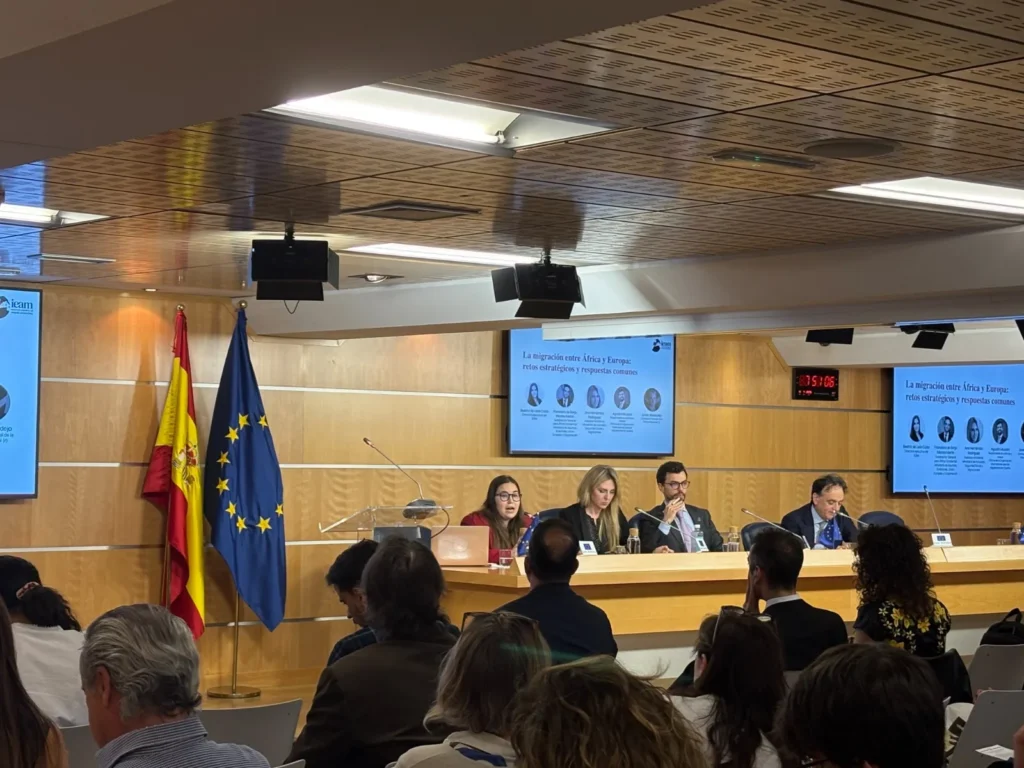
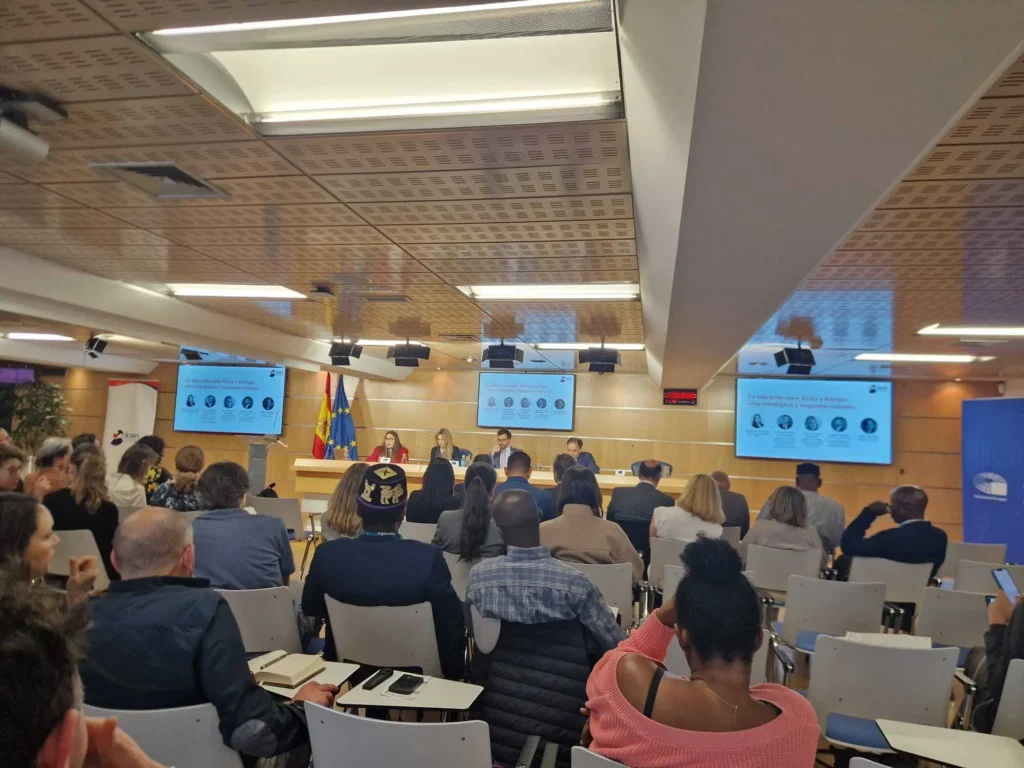
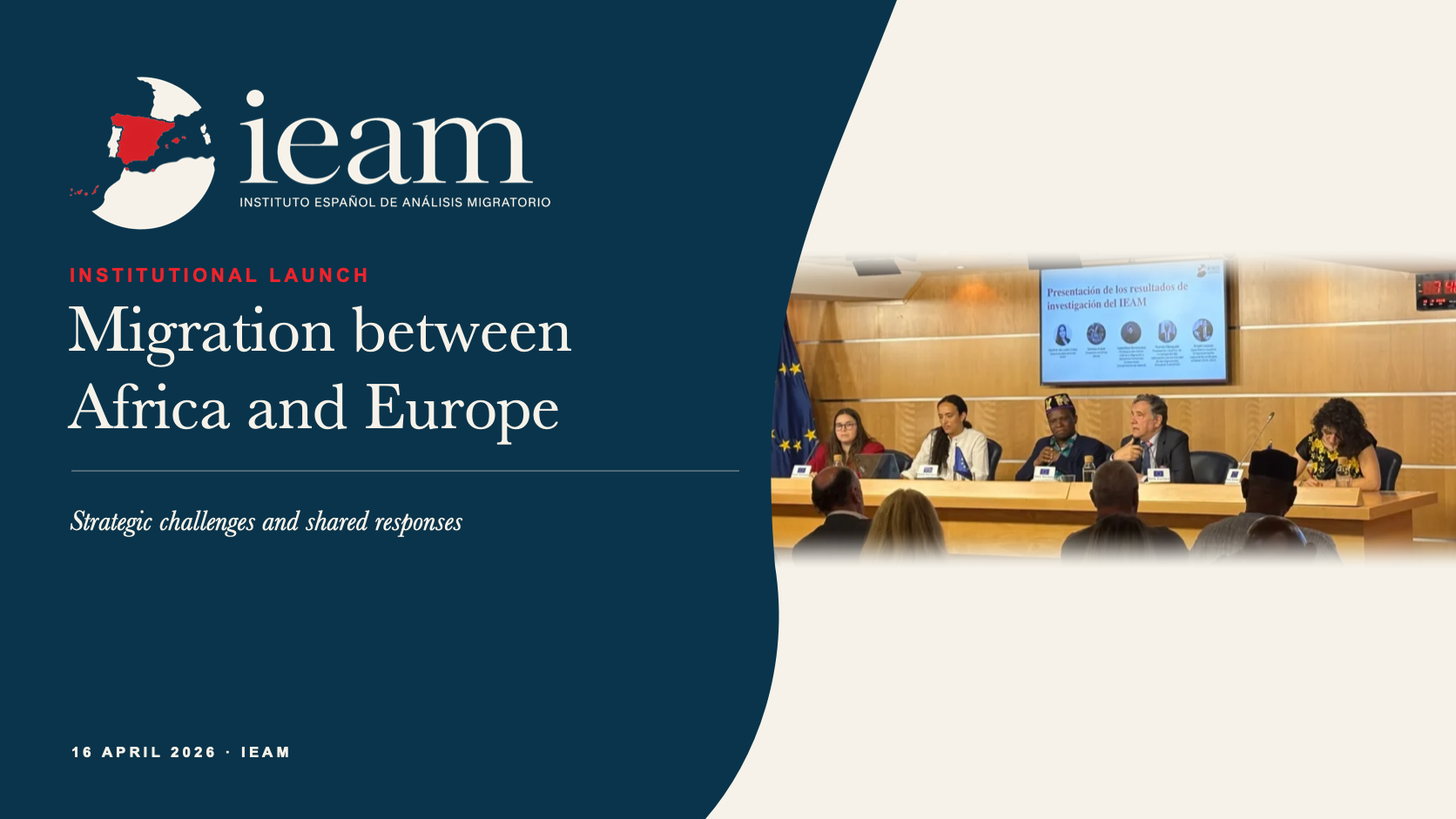
On 16 April 2026, the Spanish Institute for Migration Analysis (IEAM) held its official launch at the European Parliament Office in Madrid. Institutional representatives, researchers, international organisations and African and European partners gathered to discuss migration between Africa and Europe, explore IEAM’s first research findings and learn about its working methodology.
Led by Beatriz de León Cobo, IEAM began its activities in September 2025 to provide rigorous analysis, develop policy proposals and create spaces for dialogue on sustainable and humane approaches to migration.
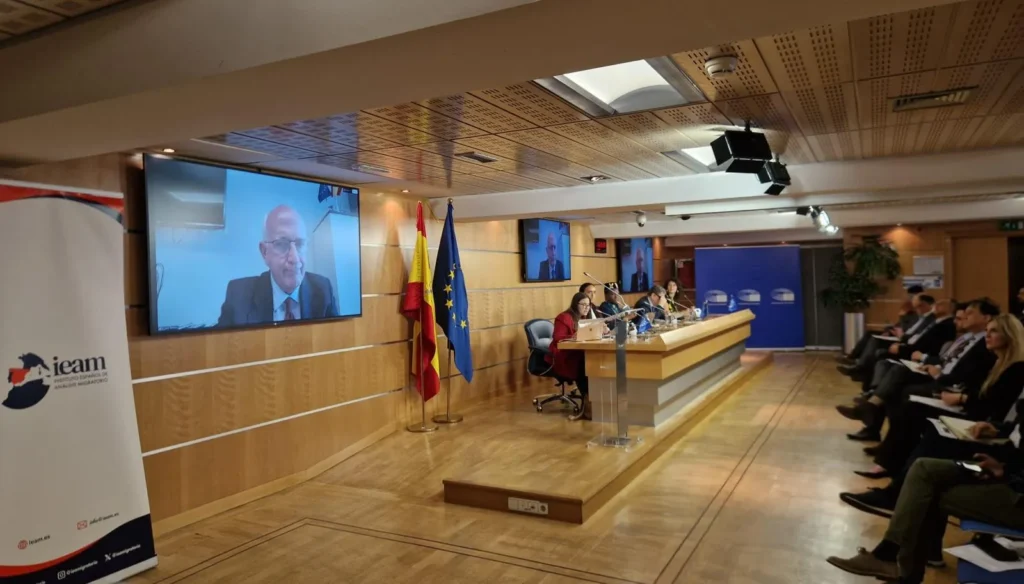
The event highlighted work that is already well advanced. In just six months, the Institute has produced technical reports, policy papers, infographics, and strategic dialogue activities across Europe and Africa, including workshops in Bamako, Dakar, and Rome. Its methodology combines strategic dialogue, research, and public influence, bringing together governments, researchers, civil society, diasporas, and the private sector to generate applied analysis and practical recommendations for decision-making.
The Institute’s Executive Director, Beatriz de León Cobo, recalled that IEAM was launched six months ago in a global context marked by rapid information flows, polarized debate, and the difficulty of building effective, humane, and long-term migration policies. She emphasized the Institute’s goal of creating spaces where diverse – even conflicting – views can be heard in order to improve public policy. She also highlighted West Africa and the Sahel as priority regions in this initial phase, due to their geopolitical importance and the need to incorporate African perspectives into the European debate.
The event opened with remarks by MEP Javier Zarzalejos, who advocated for a comprehensive approach to migration and warned against conflating integration issues with immigration-specific challenges. He called for a response combining effective management, cooperation, integration, and respect for democratic values. In his view, Europe is at a “turning point” in its migration strategy, with the new Pact on Migration and Asylum as a reference framework, while stressing the need to preserve rights and human dignity.
The first panel, moderated by Soraya Aybar, Director of África Mundi, brought together Valentina Benincasa of the Complutense University of Madrid, Roméo Gbaguidi, President of LemAfriQ, and Ángel Losada, former EU Special Representative for the Sahel. They presented IEAM’s work on irregular migration in Spain, mobility governance in West Africa and the European dimension of migration policy.
The discussion addressed the loss of regular status, unaccompanied minors and the need for greater coordination among EU Member States. It highlighted the importance of a broader strategy based on partnership, prevention and shared responsibility.
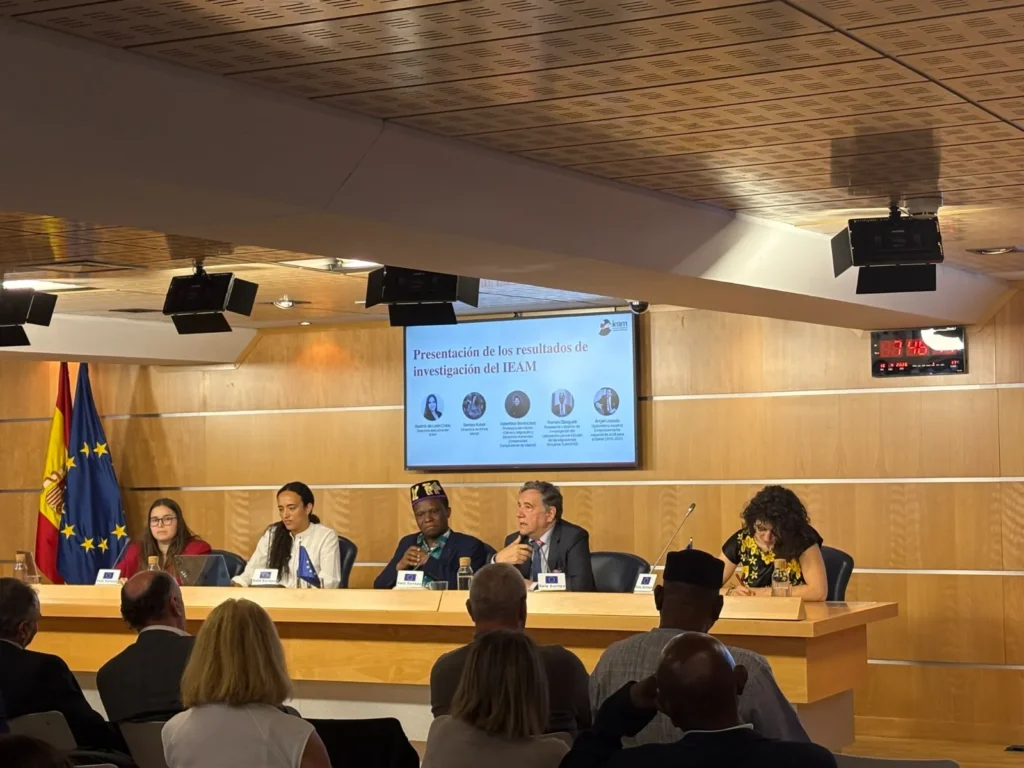
The second panel, titled “Migration between Africa and Europe: strategic challenges and common responses,” brought together Ana Hernández Rodríguez, ministerial advisor; Francisco de Borja Morate Martín, Deputy Director-General for West Africa; Agustín Mussini, representative of the International Organization for Migration in Spain; and Javier Albaladejo, former senior commissioner of the Spanish National Police.
Regarding the extraordinary regularization process, Hernández Rodríguez emphasized that it targets people already in Spain, not new arrivals: “It is not about giving money, but about giving the possibility to be individuals with rights and obligations”. She also noted that the debate has been heavily influenced by the spread of incorrect versions of the text and by a wave of misinformation that has distorted the meaning of the measure.
From the Ministry of Foreign Affairs, Borja Morate Martín highlighted that the Spain–Africa Strategy 2025–2028 reflects the growing importance Spain attaches to its African policy and, in particular, to West Africa as a priority region. He also emphasized Senegal as one of the most relevant strategic partners for Spain in West Africa and highlighted the recent upgrading of bilateral relations to the level of a strategic partnership.
From the International Organization for Migration (IOM), Agustín Mussini recalled that in a country like Spain, migration is “neither marginal nor exceptional”, but a structural dimension of social, political, economic, labour, and demographic life. He added that a mature migration policy “does not merely manage entries; it organizes trajectories, reduces vulnerabilities, and expands opportunities”.
The security perspective was provided by Javier Albaladejo, who stressed that the fight against organized crime networks involved in human trafficking remains a constant priority on the European agenda. He underlined that the key often lies in effectively targeting the financial and organizational structures behind these networks.
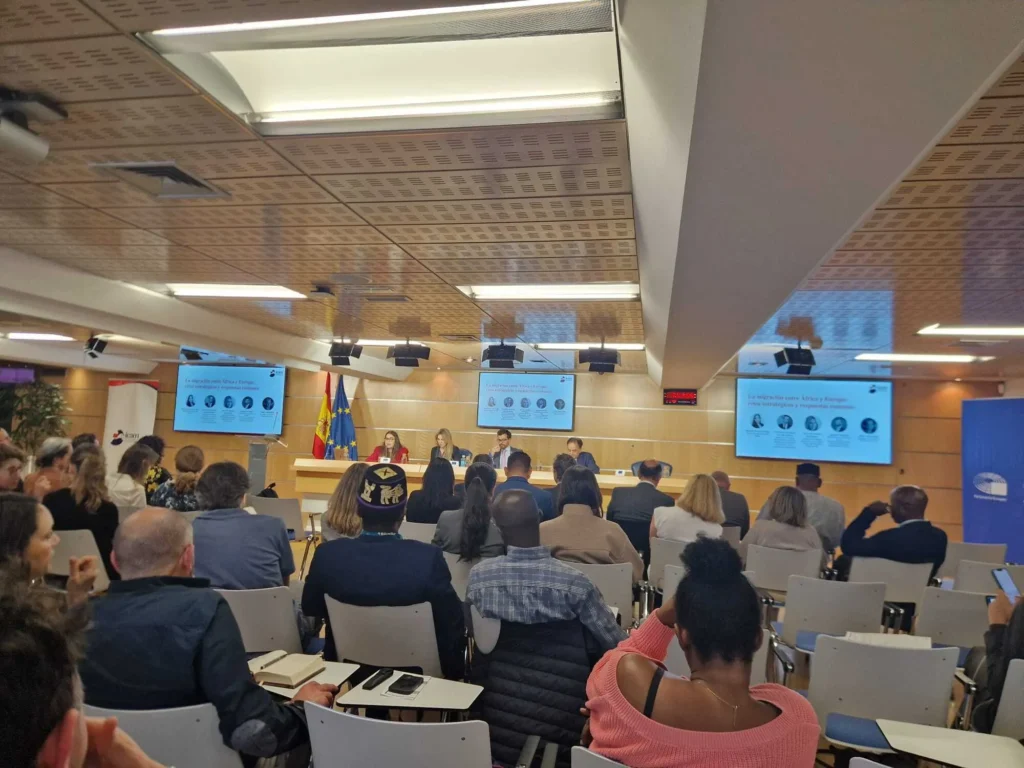
In closing, Beatriz de León Cobo summarized the event in three ideas. First, that migration is an extraordinarily complex, technical, and cross-cutting issue that must be addressed with both respect and analytical ambition. Second, that the migration debate cannot be reduced to a single dimension, but must integrate security, demography, employment, social cohesion, foreign policy, and field-based knowledge. And third, that truly effective responses require time, predictability, and strategic vision, as it is not possible to resolve within a single legislative term problems and dynamics that have been built over decades. With this launch, the Spanish Institute for Migration Analysis consolidates a particularly active initial phase and positions itself as a new reference space for migration analysis in Spain. Its approach is based on building bridges between research, institutions, field realities, and civil society, and on contributing to a more honest, better-informed, and more useful public conversation on one of the issues that will most shape the future of Europe and Africa.
Event programme
18:30 – 18:45 | Institutional presentation of IEAM
Welcome remarks and institutional presentation of the Spanish Institute for Migration Analysis.
Beatriz de León Cobo, Executive Director of IEAM.
Javier Zarzalejos, MEP.
18:45 – 19:30 | Presentation of the Institute’s Work
Moderator: Soraya Aybar, Associate Researcher at IEAM and Director of África Mundi, a media outlet specialized in the African continent and Africa–Europe relations.
• Migration and migrants. How can we study irregularity in migration processes? Spain: a case study
Valentina Benincasa, Associate Researcher at IEAM, lecturer in the Master’s program in Gender, Migration and Human Rights (Complutense University of Madrid), and PhD in Social Anthropology, specializing in humanitarianism and border policies.
• Rethinking mobility between Mali and Europe: legal and circular mobility, reintegration with a community-based approach, and regional governance
• Reforming mobility governance in West Africa
Roméo Gbaguidi, Associate Researcher at IEAM and President of the think tank LemAfriQ, specializing in migration between Africa and Europe, as well as African diasporas.
• EU–Africa migration diplomacy: from flow management to strategic coherence
• Route-based approach: reducing flows or vulnerabilities? Towards a coherent strategy for protection and the fight against criminal economies
• Credible legal pathways: between political promise and real capacity – structuring circular mobility, local rootedness, and the role of diasporas
Ángel Losada, Spanish diplomat, Ambassador of Spain to Iran (2021–2024) and former EU Special Representative for the Sahel (2015–2021).
19:30 – 20:20 | The migration issue between Africa and Europe: strategic challenges and shared responses
Moderator: Beatriz de León Cobo, Executive Director of IEAM.
Francisco de Borja Morate Martín, Deputy Director-General for West Africa, Directorate-General for Africa, Ministry of Foreign Affairs, European Union and Cooperation.
Ana Hernández Rodríguez, advisor in the office of the Ministry of Inclusion, Social Security and Migration of Spain.
Agustín Mussini, Policy and Liaison Officer at the International Organization for Migration (IOM) Office in Spain.
Javier Albaladejo, Chief Commissioner of the National Police (ret.).
20:20 – 20:30 | Conclusion and closing remarks
20:30 – 21:15 | Spanish wine reception
Photo Gallery